VHL complex, active
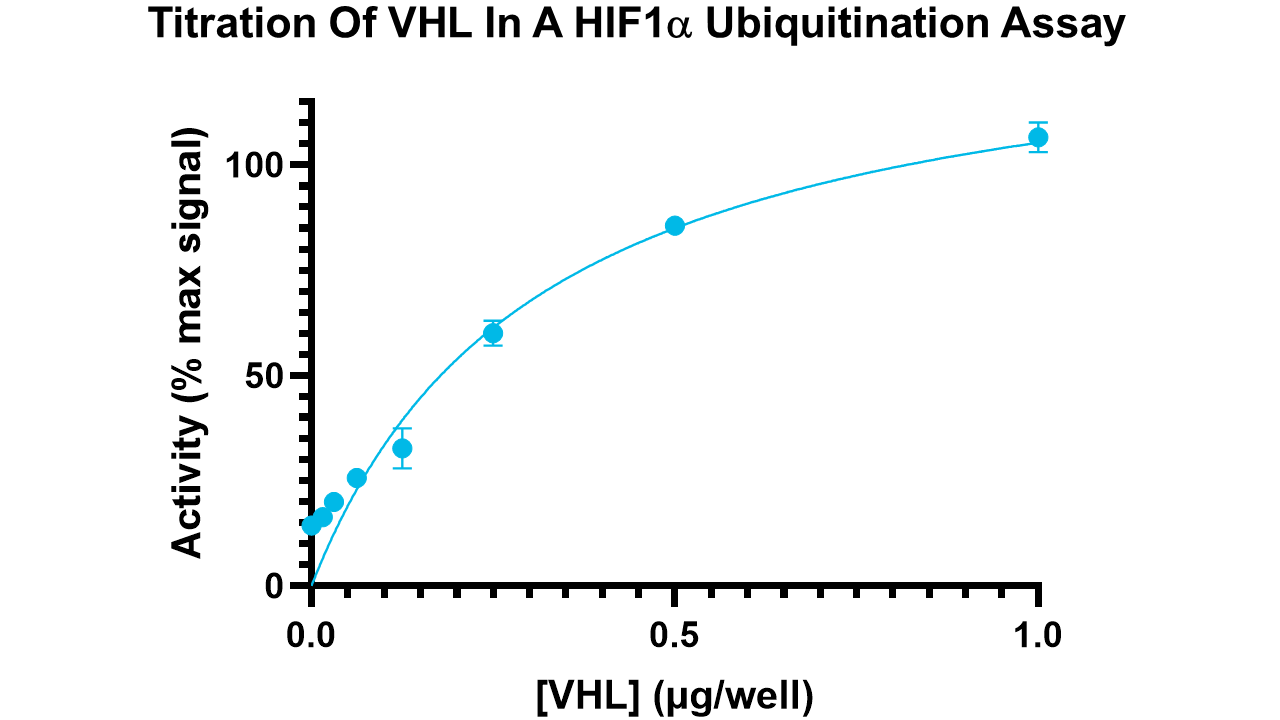
Active VHL complex. 6His and GST-tagged, recombinant, human VHL complex (VHL amino acid residues 54-end).
Catalog #: 23-044
Size:
10 µg
Unit Price: USD 399.00
Log in to see your actual price
Qty
Specifications
Documentation
Biological Information
Background Information:
VHL is a tumor suppressor protein that serves as the substrate recognition subunit of a VHL multiprotein E3 ubiquitin ligase complex (Cul2–Elongin B-Elongin C–Rbx1–VHL). Under normal oxygen conditions, VHL binds hydroxylated forms of the transcription factor HIF1-alpha, leading to its ubiquitination and proteasomal degradation. When VHL is inactivated (via mutation or deletion), HIF1-alpha accumulates, drives expression of genes such as VEGF, PDGF, and others that promote angiogenesis, proliferation, and metabolic adaptation. VHL germline mutations cause Von Hippel–Lindau disease, a hereditary cancer syndrome with tumors in kidney, CNS hemangioblastoma, pheochromocytoma, pancreatic cysts, and other lesions. VHL has become one of the most widely used “hook” proteins in targeted protein degradation (TPD) strategies (eg. PROTACs) because small molecules that bind VHL can recruit disease-relevant target proteins to the VHL E3 machinery for ubiquitination and degradation.
Target Class:
Ubiquitination-related
Family:
VHL
Sub Family:
E3 Ligase
Protein Name:
VHL
Protein Aliases:
Protein G7; pVHL (VHL)
Accession Number:
NM_000551.3 (VHL); NM_007108.2 (Elongin B); NM_005648.2 (Elongin C); NM_003591.3 (Cul2); NM_014248.
UniProt Number:
P40337 (VHL)
Gene Name:
VHL
Gene ID:
7428 (VHL)
Gene Aliases:
RCA1; VHL1; pVHL; HRCA1 (VHL)
Target Species:
Human
Usage
Product Type:
Enzymes
Application:
Drug Discovery & Development
Storage Conditions:
1 year at -70°C
Usage disclaimer:
These products may be covered by issued US and/or foreign patents, patent applications and subject to a Limited Use Label License. Please visit discoverx.com/license for a list of products that are governed by limited use label license terms and relevant patent and trademark information.
Assay Information
Assay Type:
Enzymatic
Assay Measures:
ECL
Bioassay Data
Trademark Statement:
For Research Use Only
Clinical Relevance
Therapeutic Area:
Oncology