CHIP, active
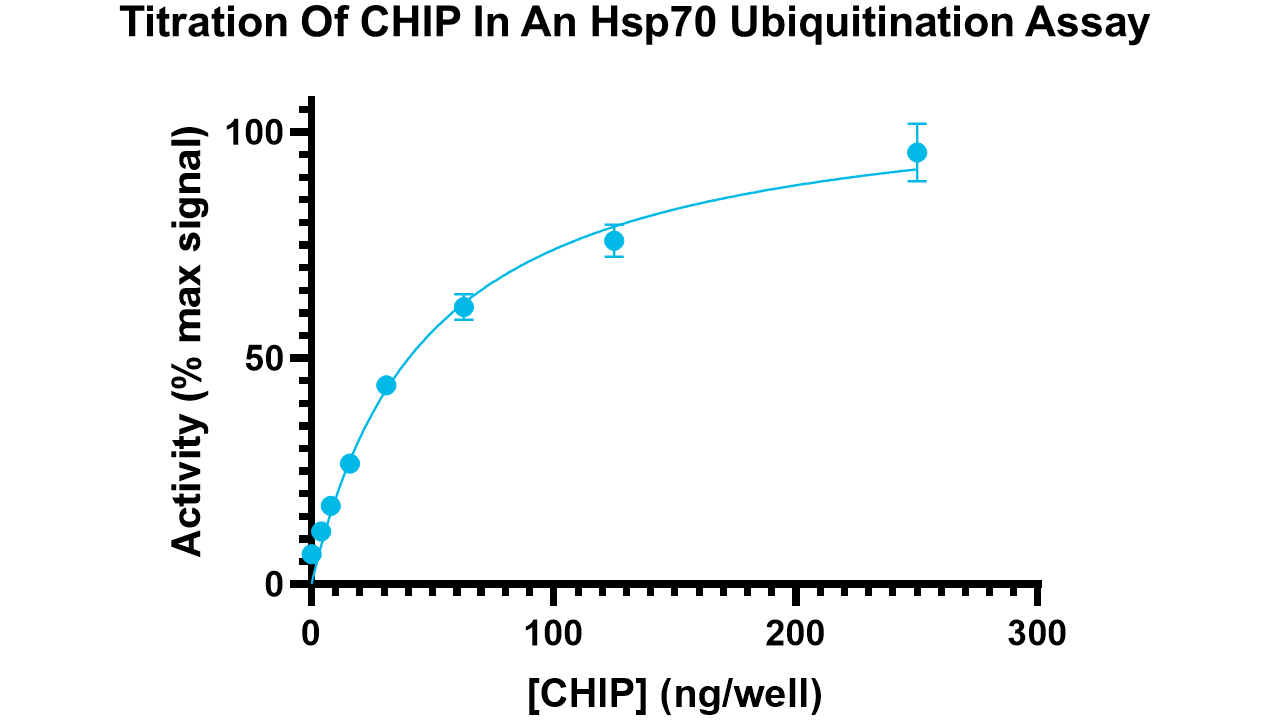
Active CHIP. N-terminal 6His-tagged, recombinant human full-length CHIP.
Catalog #: 23-050
Size:
10 µg
Unit Price: USD 399.00
Log in to see your actual price
Qty
Specifications
Documentation
Biological Information
Background Information:
CHIP is an E3 ubiquitin ligase and co-chaperone that plays a central role in cellular protein quality control. By interacting with molecular chaperones such as HSC70, HSP70, and HSP90, CHIP monitors the folding state of proteins and determines their fate. When proteins are misfolded or damaged, CHIP shifts the balance away from refolding and toward degradation by tagging these chaperone-bound substrates with ubiquitin, thereby directing them to the proteasomal or, in some contexts, lysosomal degradation pathways. Through this coupling of the chaperone machinery to the ubiquitin–proteasome system, CHIP helps maintain cellular proteostasis and overall homeostasis. CHIP has been shown to ubiquitinate and promote degradation of multiple oncogenic proteins (including receptor tyrosine kinases, steroid hormone receptors, and signaling kinases), positioning it as a context-dependent tumor suppressor or regulator of oncogenic stability. In neurodegenerative and protein-misfolding disorders (e.g., Alzheimer’s and Parkinson’s disease) CHIP is of interest because it facilitates the clearance of aggregation-prone proteins such as tau, alpha-synuclein, and polyglutamine-expanded proteins.
Target Class:
Ubiquitination-related
Family:
U-box
Sub Family:
E3 Ligase
Protein Name:
CHIP
Protein Aliases:
Antigen NY-CO-7
Accession Number:
NM_005861.2
UniProt Number:
Q9UNE7
Gene Name:
STUB1
Gene ID:
10273
Gene Aliases:
CHIP; SCA48; UBOX1; SCAR16; HSPABP2; NY-CO-7; SDCCAG7
Target Species:
Human
Usage
Product Type:
Enzymes
Application:
Drug Discovery & Development
Storage Conditions:
1 year at -70°C
Usage disclaimer:
These products may be covered by issued US and/or foreign patents, patent applications and subject to a Limited Use Label License. Please visit discoverx.com/license for a list of products that are governed by limited use label license terms and relevant patent and trademark information.
Assay Information
Assay Type:
Enzymatic
Assay Measures:
ECL
Bioassay Data
Trademark Statement:
For Research Use Only
Clinical Relevance
Therapeutic Area:
Oncology/Neurological disorders