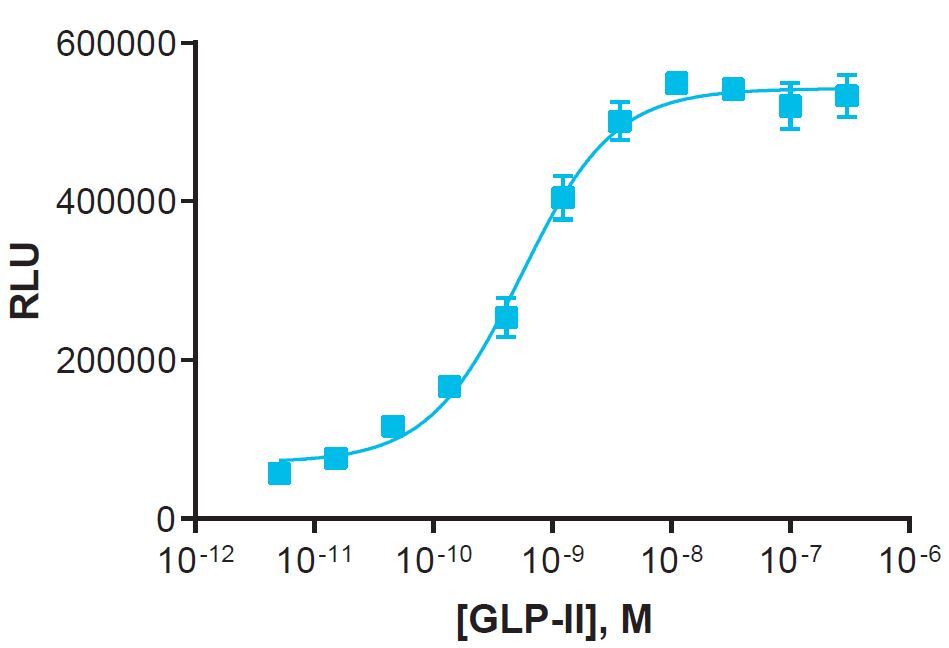

β-Arrestin Recruitment and PathHunter® Technology A. GLP-2R β-Arrestin Pathway Upon ligand binding (such as GLP-2, teduglutide, or other GLP-2R agonists), GLP-2R is phosphorylated by GPCR kinases, leading to β-arrestin-2 recruitment. This stoichiometric (1:1 receptor:ligand), non-amplified signal enhances sensitivity for detecting GLP-2R antagonists and differentiating between partial and full agonists compared to amplified second messenger assays. β-arrestin-2 binding terminates G-protein signaling and drives receptor internalization and desensitization. The receptor is then recycled or degraded. Analyzing the GLP-2R β-arrestin pathway allows fine-tuning of compound characterization, assessment of ligand bias versus G-protein pathways, and discrimination of full, super, and partial agonists.
B. PathHunter® Assay Technology. The PathHunter® GLP-2R assay uses Enzyme Fragment Complementation (EFC). GLP-2R is fused with a small enzyme donor fragment (ProLink™), and β-arrestin-2 carries the complementary enzyme acceptor fragment (EA). Upon GLP-2R activation by test compounds, β-arrestin-2 recruitment forces complementation of the enzyme fragments to reconstitute active β-galactosidase. This generates a chemiluminescent signal proportional to receptor activation. The β-arrestin recruitment assay complements cAMP and calcium assays, enabling comprehensive GLP-2R pharmacology profiling and expanding opportunities for novel GLP-2–based therapeutic development.