cAMP Hunter™ eXpress Inducible Human GLP1R Gs Assay (CHO-K1)

The cAMP Hunter™ eXpress Inducible Human GLP1R Gs assay (CHO-K1) uses a doxycycline-inducible promoter for tunable GLP1R expression. This format enables physiologically relevant pharmacology studies via cAMP detection. eXpress kits contain all assay materials: cells, reagents, and plates.
Catalog #: 65-2000E2CP2M
Size:
200 dp (2 x 96-well)
Unit Price: USD 2,290.00
Log in to see your actual price
Qty
Overview
Specifications
Documentation
Resources
Related Info
Biological Background
The GLP-1 receptor (GLP-1R) is a key therapeutic target in metabolic disease and obesity drug discovery, where accurate characterization of ligand activity is essential.
Receptor density strongly influences pharmacological readouts, and excessive receptor expression can overestimate agonist potency while obscuring partial agonists, leading to misleading data.
The cAMP Hunter eXpress Inducible Human GLP-1R Assay enables dynamic modulation of receptor density to physiologically relevant levels and detects cAMP accumulation with high sensitivity, providing a robust and reproducible platform for profiling compounds under more informative conditions. This helps reveal true pharmacology and supports confident decision-making in drug discovery.
Product Highlights
- Controlled GLP-1R expression for more physiologically relevant assay conditions.
- Sensitive cAMP detection for robust and reliable readouts.
- Optimized to reveal true pharmacology by reducing the risk of potency overestimation at high receptor density.
- Designed to differentiate full and partial agonists for more informative compound profiling.
- Proven reproducibility and lot-to-lot consistency to support confident, routine use in drug discovery workflows.
cAMP Hunter eXpress Inducible GLP1R Assay Principle
Following ligand binding, GPCR activation triggers downstream second messenger signaling that can lead to a cellular response. This assay specifically measures activation of Gs-coupled GPCRs, which stimulate adenylyl cyclase and increase intracellular cAMP levels.
GLP-1R expression is controlled by doxycycline concentration: cells treated with increasing amounts of doxycycline display progressively higher receptor surface density (Figure 1). Once the desired expression level is established, cells are stimulated with a ligand and intracellular cAMP is quantified using the HitHunter™ cAMP detection kit included in the eXpress kit (Figure 2). It is a homogeneous, no-wash competitive immunoassay based on Enzyme Fragment Complementation (EFC) technology. In this format, the luminescent signal is directly proportional to cAMP concentration and therefore reflects the extent of GLP-1R activation

Figure 1. Doxycycline-dependent control of GPCR expression in cAMP Hunter™ eXpress Inducible GLP-1R GPCR Gαs cells. (A.) Schematic of the doxycycline-inducible expression system. Increasing doxycycline activates the inducible promoter and drives higher GPCR expression at the cell surface.(B.) qRT-PCR analysis of GLP-1R mRNA in cAMP Hunter eXpress Inducible GLP-1R Gαs cells treated with increasing doxycycline concentrations. Relative GLP-1R mRNA, normalized to POLR2, increases dose-dependently, confirming titratable control of receptor expression.

Figure 2. cAMP HitHunter™ Assay Principle
cAMP Hunter eXpress Inducible GLP-1R Assay Workflow
The kits contain all the reagents needed to detect cAMP in whole cells expressing doxycycline-inducible Gs-coupled receptors following activation by a biologic or small-molecule ligand. After thawing and plating the cells at the desired doxycycline concentration(s), the cells are stimulated with an agonist, leading to cAMP accumulation. The HitHunter cAMP detection reagents (included in the kit) are then used to measure this accumulation using a simple homogeneous protocol described in this manual (Figure 3). The assay is compatible with agonist-mode testing in both 96-well and 384-well plate formats.

Figure 3. cAMP Hunter eXpress Inducible GLP-1R Assay Workflow – Agonist
Controlled GLP-1R Expression Reveals Distinct Agonist Pharmacology Across Ligand Classes
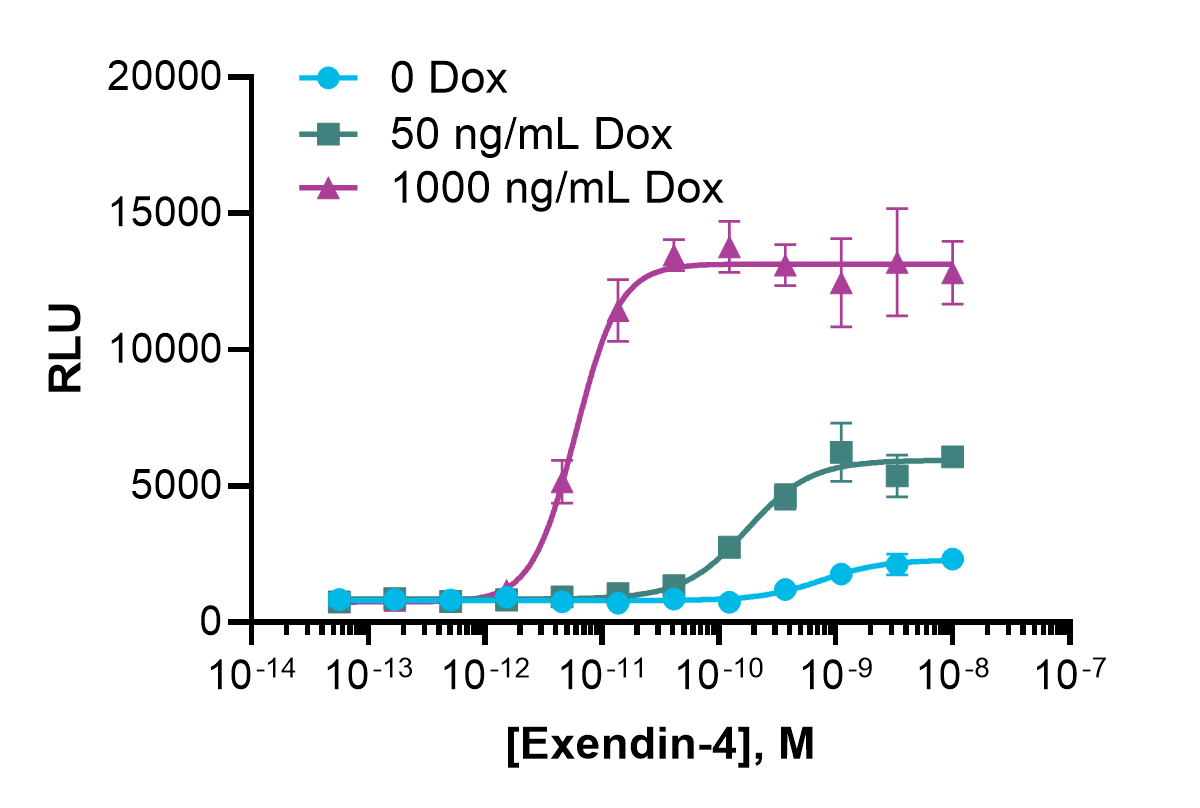
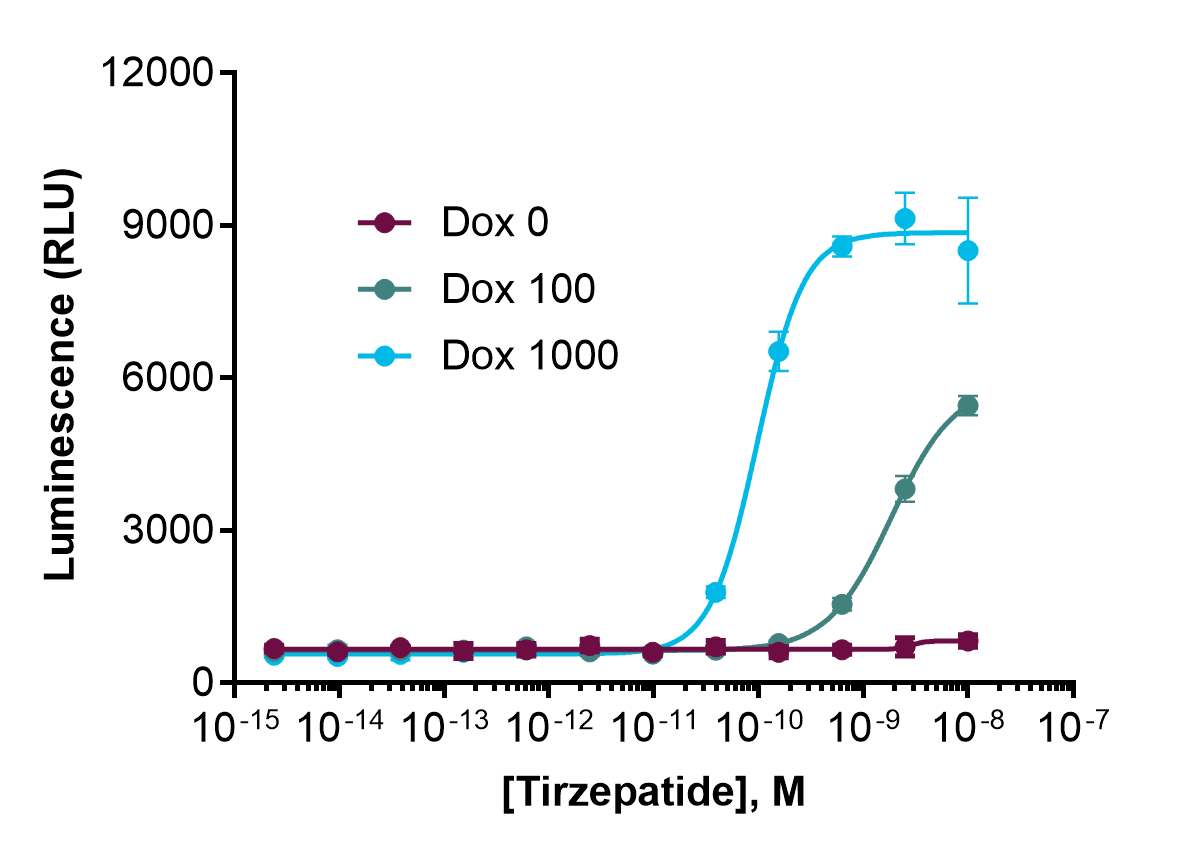
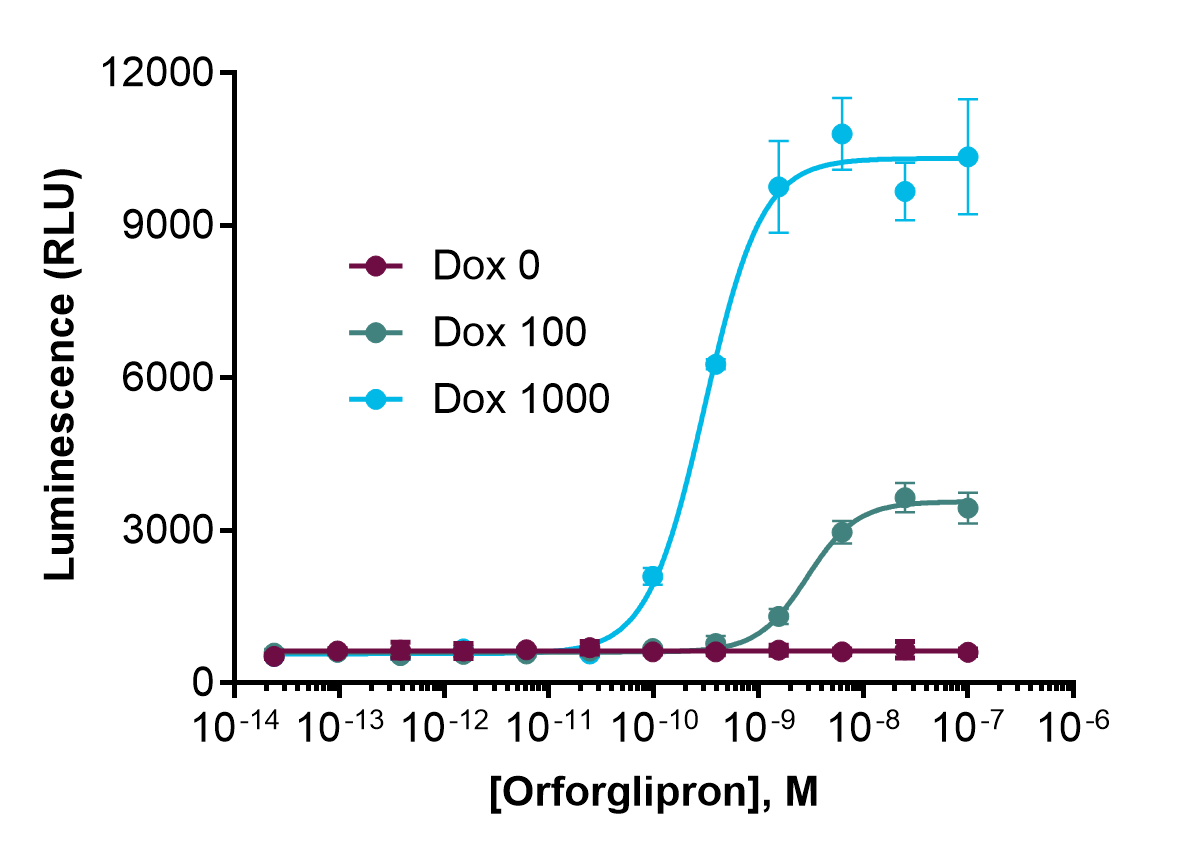
The following three dose-response curves (Figure 4) compare the pharmacological behavior of exendin-4 (A.), tirzepatide (B.), and orforglipron (C.) in the cAMP Hunter eXpress Inducible Human GLP-1R assay across increasing levels of doxycycline-induced receptor expression. By precisely controlling GLP-1R density, the system enables direct assessment of how receptor abundance influences both potency and efficacy.


Figure 4. Functional Characterization of Exendin-4 (A.), Tirzepatide (B.), and Orforglipron (C.) using the cAMP Hunter eXpress Inducible GLP-1R Assay.
Overall, the data show that the inducible GLP-1R assay generates robust, reproducible, receptor density-dependent cAMP responses. Importantly, it allows clear discrimination between full and partial agonists, as illustrated by the distinct pharmacological profiles of the three compounds tested. This includes a peptide agonist (exendin-4), a dual incretin peptide (tirzepatide), and a small molecule agonist (orforglipron), demonstrating that the assay is well suited to profile diverse ligand classes under defined receptor expression conditions.
These findings highlight the value of the assay as a sensitive and flexible platform for GLP-1R characterization in obesity drug discovery. The controlled inducible system makes it possible to investigate complex pharmacology, compare compounds across receptor densities, and distinguish differences in agonist behavior with confidence.
Lot-to-Lot Reproducibility and GLP1R Expression-Dependent Potency
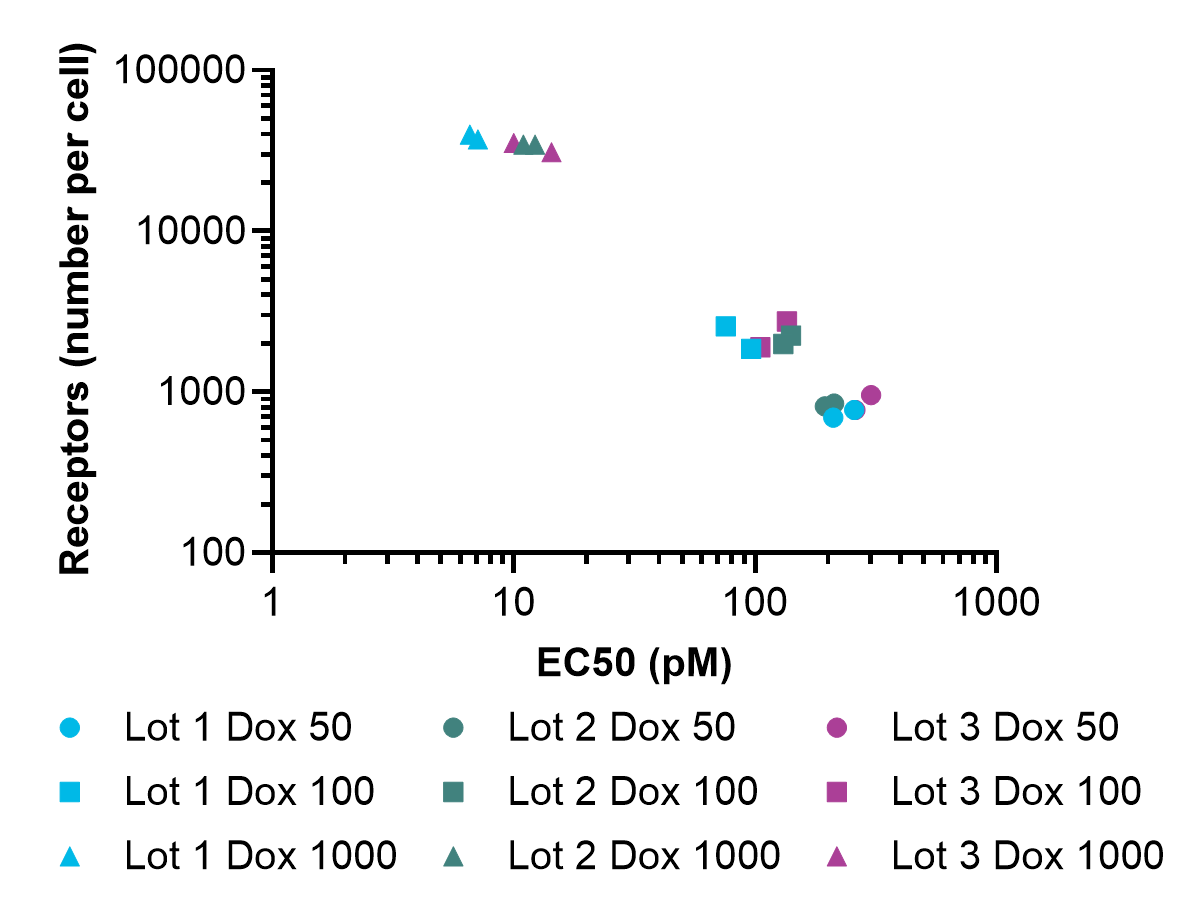
Figure 5 illustrates the performance of the cAMP Hunter eXpress Inducible GLP-1R assay across two complementary readouts. Three independent cell lots were analyzed by FACS to assess doxycycline-dependent GLP-1R expression, showing a consistent increase in receptor number per cell with rising doxycycline concentrations and strong reproducibility across duplicate runs (Figure 5A) . Exendin-4 dose-response curves generated under the same conditions were used to plot EC50 values against receptor number per cell, revealing a clear relationship between GLP-1R expression level and functional potency (Figure 5B).
Together, these data demonstrate robust lot-to-lot and run-to-run consistency, as well as the ability of the inducible assay to capture receptor density-dependent pharmacology.


Figure 5. Lot-to-Lot Reproducibility and GLP-1R Expression-Dependent Exendin-4 Potency in the Inducible Assay. (A.) Doxycycline-dependent GLP-1R expression was assessed by FACS across three independent cell lots, showing strong lot-to-lot and run-to-run consistency. (B.) Exendin-4 potency was then evaluated across the same conditions, revealing a clear relationship between receptor expression level and EC50.